
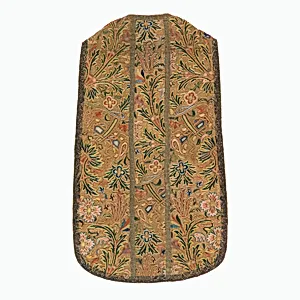
Chasuble back
late 19th century
Medium
costume & accessories
Classification
costume & accessories
Department
Smithsonian Collection
Museum
Smithsonian American Art Museum
Credit
Smithsonian American Art Museum
Accession Number
1947-22-1
Rights
Public Domain
About this artwork
Research in Progress
Art Historical Context
Step into the ornate world of 19th-century religious vestments with this intriguing *Chasuble back* from the Smithsonian American Art's collection of costumes and accessories. Dating to the late 1800s, a chasuble is the sleeveless outer garment worn by clergy during Catholic Mass, with the back panel often serving as the focal point for decoration. This artifact, though by an unknown maker, exemplifies the craftsmanship of ecclesiastical textiles during a period of revival in liturgical arts amid the Gothic Revival movement, blending functionality with spiritual symbolism. As a highlight in the Smithsonian's holdings, this piece underscores the intersection of fashion, faith, and fine art. Late 19th-century chasubles typically featured rich embroidery, metallic threads, or appliqués depicting biblical scenes, saints, or sacramental motifs—techniques that demanded skilled needlework and luxurious materials like silk or velvet. Its classification as a costume accessory elevates it beyond mere utility, inviting us to appreciate how such items adorned sacred rituals while showcasing artistic innovation. Research into this chasuble back is ongoing, adding a layer of mystery that sparks curiosity. What stories of devotion or craftsmanship does it hold? Visit the Smithsonian American Art Museum to ponder its cultural legacy firsthand.
About the Artist
Unknown
The artist designated as "Unknown" in our virtual museum's collection exemplifies a poignant chapter in art history: creators whose identities have faded into obscurity despite the enduring power of their work. With only one known artwork attributed to them in our holdings, this figure represents countless anonymous hands that shaped visual culture across centuries. Museums worldwide, including th...