
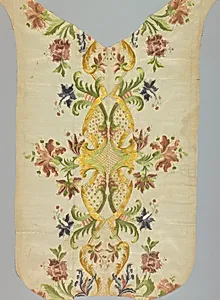
chasuble
mid-18th century
Medium
costume & accessories
Classification
costume & accessories
Department
Smithsonian Collection
Museum
Smithsonian American Art Museum
Credit
Gift of Mrs. Nicholas Fish
Accession Number
1904-9-1-b
Rights
Public Domain
About this artwork
Research in Progress
Art Historical Context
This elegant chasuble, dating to the mid-18th century is a striking example of liturgical vestment from the Smithsonian American Art Museum's collection of costumes and accessories. Worn by priests over other garments during Mass, the chasuble—resembling a sleeveless poncho—ed both practical and symbolic purposes in religious ceremonies. Crafted during a time of colonial expansion and religious diversity in America, it reflects the era's blend of European ecclesiastical traditions with emerging New World influences, though its exact provenance awaits further study. As an anonymous artisan's work, the piece highlights the skilled needlework and textile artistry of the period, where such garments were often adorned with intricate embroidery, silk, or metallic threads to evoke divine splendor. Donated by Mrs. Nicholas Fish, wife of a prominent Revolutionary War figure, it connects to early American elite collecting, preserving artifacts of faith and fashion for future generations. Currently under research, this chasuble invites us to ponder the lives of those who wore it—clergy navigating a young nation's spiritual landscape. Visit the Smithsonian to glimpse its textures up close and contribute to ongoing discoveries! (198 words)
About the Artist
Unknown
The artist designated as "Unknown" in our virtual museum's collection exemplifies a poignant chapter in art history: creators whose identities have faded into obscurity despite the enduring power of their work. With only one known artwork attributed to them in our holdings, this figure represents countless anonymous hands that shaped visual culture across centuries. Museums worldwide, including th...