
Chatelaine Design
Classification
Department
Smithsonian Collection
Museum
Smithsonian American Art Museum
Credit
Purchased for the Museum by the Advisory Council
Accession Number
1921-6-418-10
Rights
Public Domain
About this artwork
Research in Progress
Art Historical Context
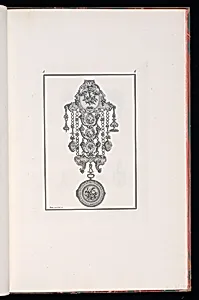
**Chatelaine Design** by Pierre Moreau (French, 1722–1798), created in 1771, is a delicate print showcasing the artist's skill in ornamental design. Moreau, a prominent engraver of the late Rococo period, specialized in intricate patterns for luxury goods, bridging the opulent curves of Rococo with emerging Neoclassical elegance during Louis XV's reign. This work, now in the Smithsonian American Art Museum's collectionpurchased by the Advisory Council), reflects the era's fascination with decorative arts, where prints like this served as blueprints for jewelers and silversmiths. A chatelaine was a fashionable accessory for women—a ornate clasp or chain worn at the waist to hold practical items like keys, scissors, or watches, symbolizing domestic authority and refined taste. Moreau's design likely captures the lavish motifs of 18th-century French fashion, with scrolling flourishes and symmetrical details typical of the time. As a print, it highlights the medium's role in democratizing high-end designs, allowing artisans across Europe to replicate sophisticated styles. Though research continues on its exact techniques and medium, this piece offers a window into transatlantic influences, bridging French craftsmanship with American collections. Visitors will appreciate its glimpse into the elegant world of Enlightenment-era luxury. (198 words)