
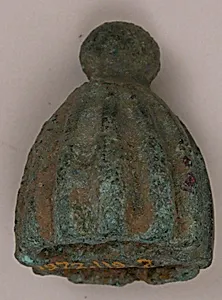
Chess Piece, probably a Pawn
Unknown Artist
8th–11th century
Medium
Bronze
Dimensions
H.1 3/8 in. (3.5 cm)
Classification
Gaming pieces
Department
Islamic Art
Museum
Metropolitan Museum of Art, New York, NY
Credit
Pfeiffer Fund, 1972
Accession Number
1972.119.2
Rights
Public Domain
Tags
Art Historical Context
This modest bronze chess piece, likely pawn, hails from the Islamic world between the 8th and 11th centuries, a golden age when chess—known then as *shatranj*—flourished across the region. Originating from ancient Indian *chaturanga*, the game spread via Persia into Islamic cultures, becoming a favorite pastime among scholars, caliphs, and merchants. Standing just 1 3/8 inches (3.5 cm) tall, this unassuming gaming piece exemplifies the everyday artistry of the era, crafted for both play and portability. Bronze was a prized medium in Islamic metalwork, valued for its durability and lustrous finish, often achieved through sophisticated lost-wax casting techniques. Though the artist remains unknown, the piece's simple form reflects functional design tailored to the game's pawns, the foot soldiers of the chessboard that could promote to more powerful roles upon reaching the opponent's side—a mechanic symbolizing social mobility in medieval Islamic society. Today, housed in the Metropolitan Museum of Art's Islamic Art Department (acquired via the Pfeiffer Fund in 1972), this tiny artifact offers a window into a vibrant cultural exchange, where strategy games fostered intellectual bonds amid expanding trade routes from Baghdad to Córdoba. A reminder that even small objects carry the weight of history!