
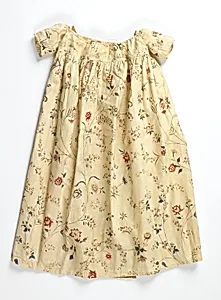
Child's dress
late 18th century
Classification
printed, dyed & painted textiles
Department
Smithsonian Collection
Museum
Smithsonian American Art Museum
Credit
Gift of Mrs. Robert P. Brown
Accession Number
1960-81-9
Rights
Public Domain
About this artwork
Research in Progress
Art Historical Context
Step back in time to the late 18th century this charming *Child's Dress* from the Smithsonian American Art Museum collection. Dating to the final decades of the 1700s, this garment offers a glimpse into the world of childhood fashion during America's early republic era. Children's clothing from this period often echoed adult styles but in simpler, more playful forms, reflecting growing ideas about innocence and play. Donated as a gift from Mrs. Robert P., it highlights the Smithsonian's commitment to preserving everyday treasures that illuminate social history. Crafted from printed, dyed, and painted textiles—a classification that points to skilled handwork common before industrialized production—this dress showcases techniques like block printing or resist dyeing, which allowed for vibrant patterns and colors affordable for middle-class families. These methods were labor-intensive, blending artistry with utility, and often drew from European influences adapted in American homes. Though the exact medium awaits further research (noted as "Research in Progress"), such textiles were prized for their durability and decorative appeal. This piece invites us to ponder the lives of young wearers—perhaps romping through colonial gardens or attending family gatherings. As part of the Smithsonian Collection, it underscores the cultural importance of textiles in shaping American identity, bridging fashion, craft, and history.
About the Artist
Unknown
The artist designated as "Unknown" in our virtual museum's collection exemplifies a poignant chapter in art history: creators whose identities have faded into obscurity despite the enduring power of their work. With only one known artwork attributed to them in our holdings, this figure represents countless anonymous hands that shaped visual culture across centuries. Museums worldwide, including th...