
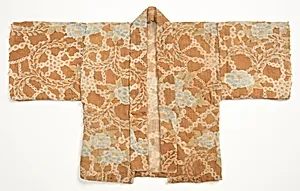
Child's kimono
late 18th century
Medium
printed, dyed & painted textiles
Classification
printed, dyed & painted textiles
Department
Smithsonian Collection
Museum
Smithsonian American Art Museum
Credit
Smithsonian American Art Museum
Accession Number
1956-64-14
Rights
Public Domain
About this artwork
Research in Progress
Art Historical Context
This delicate child's kimono, dating to the late 18th century, a glimpse into the world exquisite textile craftsmanship from Japan's Edo period. Crafted printed, dyed, and fabrics, it exemplifies the era's advanced techniques, where artisans combined woodblock printing, resist-dyeing (like yūzen), and hand-painting to create vibrant, intricate patterns. Such garments were not just clothing but symbols of cultural refinement, often featuring motifs evoking prosperity, longevity, and protection for the young wearer. In the context of 18th-century Japan, kimonos were treasured family heirlooms, designed to be both functional and auspicious. The lightweight, layered construction suited the climate, while bold colors and designs reflected ukiyo-e influences—celebrating everyday beauty amid societal prosperity. Though the artist's identity remains unknown and research continues at the Smithsonian American Art Museum, this piece highlights the global exchange of artistic traditions preserved in their collection. (178 words)
About the Artist
Unknown
The artist designated as "Unknown" in our virtual museum's collection exemplifies a poignant chapter in art history: creators whose identities have faded into obscurity despite the enduring power of their work. With only one known artwork attributed to them in our holdings, this figure represents countless anonymous hands that shaped visual culture across centuries. Museums worldwide, including th...