
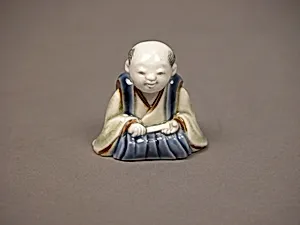
染付色絵囃子唐子形置物|Chinese child with musical instrument
Unknown Artist
late 18th century
Medium
Porcelain with underglaze blue and iron decoration (Hirado ware)
Dimensions
H. 1 5/16 in. (3.3 cm)
Classification
Ceramics
Culture & Period
Japan · Edo period (1615–1868)
Department
Asian Art
Museum
Metropolitan Museum of Art, New York, NY
Credit
Gift of Mrs. V. Everit Macy, 1923
Accession Number
23.225.57
Rights
Public Domain
Tags
Art Historical Context
This charming porcelain figurine, titled *染付色絵囃子唐子形置物* (Chinese Child with Musical Instrument), captures a joyful child musician from Japan's Edo period (1615–8), likely late 18th century. just 1 5/16 inches (3.3 cm) tall, it exemplifies Hirado ware, a renowned Japanese porcelain tradition from the Hirado kilns in Nagasaki Prefecture. The piece features intricate underglaze blue (sometsuke) for outlines and motifs, enhanced by iron-based decoration for vibrant color accents, creating a lively polychrome effect on a crisp white body. Hirado ware gained fame for its delicate miniature sculptures, often depicting children, animals, or mythical figures, which were prized as decorative ornaments (okimono) by affluent Edo-era collectors. These small-scale works showcased exceptional technical skill, with thin porcelain walls and precise painting that rivaled Chinese exports while embracing Japanese aesthetics. The "hayashi karako" motif—evoking festival musicians styled as Chinese boys—reflects cultural fusion, blending imported Ming influences with local festival traditions celebrating music and playfulness. A gift to the Metropolitan Museum of Art from Mrs. V. Everit Macy in 1923, this figurine invites visitors to appreciate the whimsy and mastery of Edo craftsmanship, where everyday joy was elevated to art.