
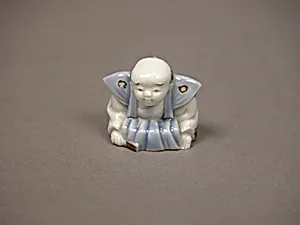
染付色絵囃子唐子形置物|Chinese child with musical instrument
Unknown Artist
late 18th century
Medium
Porcelain with underglaze blue and iron decoration (Hirado ware)
Dimensions
H. 1 in. (2.5 cm)
Classification
Ceramics
Culture & Period
Japan · Edo period (1615–1868)
Department
Asian Art
Museum
Metropolitan Museum of Art, New York, NY
Credit
Gift of Mrs. V. Everit Macy, 1923
Accession Number
23.225.61
Rights
Public Domain
Tags
Art Historical Context
This delightful porcelain figurine, titled *Chinese Child with Musical Instrument* (染付色絵囃子唐子形置物 captures a playful karako—a stylized Chinese boy—holding a musical instrument, likely evoking the lively sounds of festival music (hayashi). Crafted in Japan's Edo period (1615–1868), the late 18th century, this tiny treasure stands just 1 inch (2.5 cm) tall, exemplifying the exquisite miniaturization prized in Japanese decorative arts. Now housed in the Metropolitan Museum of Art's Art Department, it was a generous gift from Mrs. V. Everit Macy in 1923. Made from Hirado ware, a renowned porcelain tradition from the kilns of Hirado in Nagasaki Prefecture, the piece features underglaze blue (somé-tsuke) for intricate designs and iron decoration for vibrant accents. Hirado artisans were masters of fine, milk-white porcelain, often producing small okimono (ornaments) for shelves or desks, blending functionality with whimsy. The technique involved painting motifs under the glaze before firing, ensuring durable, vivid colors that highlight the boy's cheerful expression and flowing robes. Culturally, such figurines reflected Edo Japan's fascination with Chinese motifs amid growing domestic prosperity and artistic exchange. They served as charming desk accents or tokens of good fortune, embodying the period's love for music, festivals, and youthful joy. This little musician invites us to pause and appreciate the precision of Japanese ceramic innovation.