
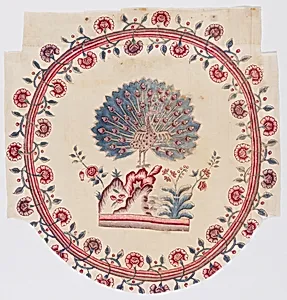
Chintz fragment
18th century
Classification
printed, dyed & painted textiles
Department
Smithsonian Collection
Museum
Smithsonian American Art Museum
Credit
Gift of Josephine Howell
Accession Number
1973-51-39
Rights
Public Domain
About this artwork
Research in Progress
Art Historical Context
This delicate *Chintz fragment* from the 18th century offers a glimpse into the vibrant world of global trade and textile innovation. Chintz, originating from, was a finely woven cotton fabric renowned for its bold floral patterns and glossy finish, achieved through a labor-intensive process of block-printing, mordant dyeing, and hand-painting. These techniques allowed for rich, fast colors—reds from madder, blues from indigo—that resisted fading, making chintz a luxury import coveted across Europe and the American colonies. In the 18th century, chintz symbolized exotic allure and colonial exchange, flooding markets via East India Company ships. It inspired fashion, upholstery, and bed hangings, sparking both admiration and controversy—France even banned it to protect local weavers. This Smithsonian fragment, part of the American Art Museum's collection and a gift from Josephine Howell, likely reflects its use in early American homes, blending Eastern artistry with New World tastes. Though research continues, the piece highlights chintz's role in democratizing beauty, bridging cultures through craft. A testament to forgotten hands, it invites us to ponder the stories woven into every thread.
About the Artist
Unknown
The artist designated as "Unknown" in our virtual museum's collection exemplifies a poignant chapter in art history: creators whose identities have faded into obscurity despite the enduring power of their work. With only one known artwork attributed to them in our holdings, this figure represents countless anonymous hands that shaped visual culture across centuries. Museums worldwide, including th...