
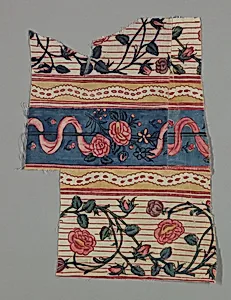
Chintz fragment
1750–1800
Classification
printed, dyed & painted textiles
Department
Smithsonian Collection
Museum
Smithsonian American Art Museum
Credit
Gift of Josephine Howell
Accession Number
1973-51-45
Rights
Public Domain
About this artwork
Research in Progress
Art Historical Context
This delicate chintz fragment, dating from 1750–1800, offers a glimpse into the vibrant of 18th-century textiles. Chintz, a finely printed cotton fabric originating from India, captivated European and American tastes during this era, flooding markets via global trade routes. Its bold floral motifs and vivid colors made it a staple for fashionable dresses, furnishings, and upholstery in colonial homes, symbolizing both luxury and the expanding influence of Eastern craftsmanship on Western life. Crafted through intricate printed, dyed, and painted techniques—likely involving wooden blocks, mordants for color fixation, and glazing for a glossy sheen—this fragment exemplifies the technical mastery of the period. Though the exact medium details are still under research, such textiles represented a fusion of artistry and innovation, challenging local weavers and sparking sumptuary debates in Europe and America. Now part of the Smithsonian American Art Museum's collection, gifted by Josephine Howell, this piece awaits further scholarly insights. It reminds us how everyday fabrics wove stories of commerce, culture, and creativity into the fabric of early American history.
About the Artist
Unknown
The artist designated as "Unknown" in our virtual museum's collection exemplifies a poignant chapter in art history: creators whose identities have faded into obscurity despite the enduring power of their work. With only one known artwork attributed to them in our holdings, this figure represents countless anonymous hands that shaped visual culture across centuries. Museums worldwide, including th...