
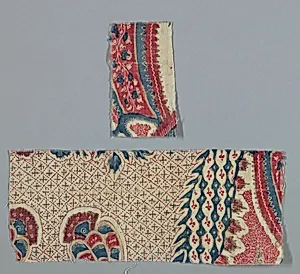
Chintz fragments
late 18th century
Medium
printed, dyed & painted textiles
Classification
printed, dyed & painted textiles
Department
Smithsonian Collection
Museum
Smithsonian American Art Museum
Credit
Gift of Josephine Howell
Accession Number
1973-51-5-a,b
Rights
Public Domain
About this artwork
Research in Progress
Art Historical Context
These delicate **Chintz fragments** from the late 18th offer a glimpse into the vibrant world of printed textiles that captivated colonial America. Chintz, originating from, was a glossy cotton fabric adorned with bold floral motifs and intricate patterns, often imported via European trade routes. By the late 1700s, it had become a status symbol in American households, used for fashionable gowns, curtains, and upholstery, blending exotic allure with everyday luxury. Crafted through labor-intensive techniques of block-printing, mordant dyeing, and hand-painting, these fragments showcase the artistry of resist-dyeing methods that allowed colors to bloom vividly without bleeding. The medium's significance lies in its fusion of craftsmanship and commerce—Indian techniques adapted for global markets, influencing Western design and sparking local imitation industries. Generously donated by Josephine Howell to the Smithsonian American Art Museum, these pieces (research ongoing) highlight chintz's role in America's emerging consumer culture, bridging continents and evoking the era's taste for opulent, nature-inspired beauty. A testament to forgotten hands that colored the past! (178 words)
About the Artist
Unknown
The artist designated as "Unknown" in our virtual museum's collection exemplifies a poignant chapter in art history: creators whose identities have faded into obscurity despite the enduring power of their work. With only one known artwork attributed to them in our holdings, this figure represents countless anonymous hands that shaped visual culture across centuries. Museums worldwide, including th...