
Chiyoda Castle (Album of Men)
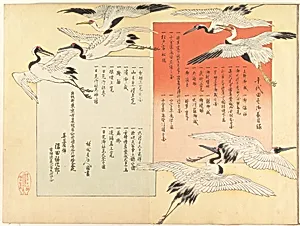
Medium
Diptych of woodblock prints; ink and color on paper
Dimensions
L. (page) 13 7/8 in. (35.2 cm); W. (page) 9 1/4 in. (23.4 cm); thickness of album 1 9/16 in. (4 cm)
Classification
Prints
Culture & Period
Japan · Meiji period (1868–1912)
Department
Asian Art
Museum
Metropolitan Museum of Art, New York, NY
Credit
Gift of Mrs. W. Walton Butterworth, 1979
Accession Number
JP3560
Rights
Public Domain
Tags
Art Historical Context
Yōshū Chikanobu’s *Chiyoda Castle (Album of Men)*, created in 1897, offers a vivid glimpse into Japan’s Meiji period (1868–1912), a time of rapid modernization following centuries of isolation. As a leading ukiyo-e artist, Chikanobu specialized in woodblock prints that blended traditional techniques with contemporary subjects, often portraying court life, historical events, and the shifting social landscape. This diptych, rendered in ink and color on paper, forms part of an album exploring scenes at Chiyoda Castle—also known as Edo Castle—the historic seat of the Tokugawa shogunate and later the imperial residence in Tokyo. The work’s medium highlights the enduring appeal of Japanese woodblock printing, which allowed for intricate detail and vibrant hues to reach wide audiences. Subtle inclusions of birds among the architectural and figural elements evoke the castle’s gardens and seasonal beauty, adding a layer of tranquility to scenes that likely focused on male figures within this prestigious setting. Gifted to the Metropolitan Museum of Art in 1979, the print preserves a moment when artists like Chikanobu documented Japan’s transition while honoring its cultural heritage.
About the Artist
Yōshū (Hashimoto) Chikanobu · 1838–1912
Toyohara Chikanobu, born Hashimoto Naoyoshi in 1838 in Echigo Province (modern Niigata Prefecture), emerged as one of the last great ukiyo-e masters during Japan's Meiji era. The son of a low-ranking samurai retainer to the Sakakibara clan, he trained initially in the Kanō school of painting before turning to ukiyo-e printmaking. He studied under a disciple of Keisai Eisen, then joined the studio ...