
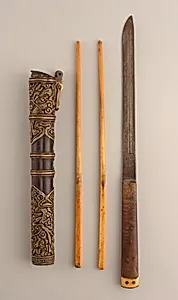
Chopsticks, knife and case
mid-19th century
Classification
cutlery
Department
Smithsonian Collection
Museum
Smithsonian American Art Museum
Credit
Gift of the Estate of Harrison Salisbury
Accession Number
1995-173-3-a/e
Rights
Public Domain
About this artwork
Research in Progress
Art Historical Context
This intriguing set of *Chopsticks, knife and case* from the mid-19th offers a glimpse into everyday life during a transformative era of global exchange. Housed in the Smithsonian American Art Museum's Smithsonian and classified as cutlery, this ensemble blends Eastern and Western utensils—a pair of chopsticks alongside a knife, neatly contained in a protective case. Such portable dining tools reflect the practical needs of travelers, merchants, or immigrants navigating expanding trade routes between Asia and the West, including America's growing ports during the California Gold Rush and Opium Wars period. Though the artist and medium remain unknown amid ongoing research, the object's presence in the museum elevates it from utilitarian item to cultural artifact. Gifted by the Estate of Harrison Salisbury—a renowned journalist known for his reporting on China and Russia—this piece hints at personal stories of cross-cultural encounters. It symbolizes fusion in material culture, where functionality meets subtle craftsmanship, inviting us to ponder the hands that once wielded these tools amid 19th-century globalization. (178 words)
About the Artist
Unknown
The artist designated as "Unknown" in our virtual museum's collection exemplifies a poignant chapter in art history: creators whose identities have faded into obscurity despite the enduring power of their work. With only one known artwork attributed to them in our holdings, this figure represents countless anonymous hands that shaped visual culture across centuries. Museums worldwide, including th...