
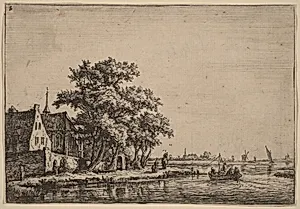
Churchyard at the Waterside
1601 to 1650
Medium
etching
Classification
Department
CG-E
Museum
National Gallery of Art, Washington, D.C.
Credit
Rosenwald Collection
Accession Number
1946.11.211
Rights
Public Domain
Art Historical Context
"Churchyard at the Waters" is a delicate etching by Dutch artist Anthonie Waterloo, created sometime between 1601 and 1650. Housed in the National Gallery of Art's Rosen Collection (Department CG-E), this print exemplifies the refined landscape tradition of the Dutch Golden Age. Waterloo, known for his meticulous etchings of rural scenes, the quiet poetry of everyday pastoral life—a churchyard nestled by the water's edge, evoking a of serene reflection amid nature's gentle embrace. Etching, Waterloo's preferred medium, allowed for intricate line work and subtle tonal gradations, techniques that brought depth and atmosphere to his compositions. In an era when printmaking revolutionized art dissemination, works like this one made sophisticated landscapes accessible beyond oil paintings, influencing collectors and fellow artists across Europe. This piece highlights the cultural reverence for the Dutch countryside during the 17th century, a time of prosperity and artistic innovation. As part of the prestigious Rosenwald Collection, it invites visitors to appreciate the enduring allure of Waterloo's technical mastery and evocative imagery.
About the Artist
Anthonie Waterloo · 1609–1690
Anthonie Waterloo (1609–1690) was a prominent Dutch Golden Age landscape artist, born on May 6 in Lille, then part of the Spanish Netherlands. Little is known of his early life beyond his mother, Magdalena Vaillant, who joined Amsterdam's Walloon Church in 1621, with Waterloo following in 1630; no records exist of formal training, and he was likely self-taught. Registered as a painter in Amsterdam...