
Claviorganum
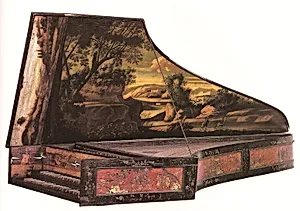
Medium
wood, various materials
Dimensions
W. 31 9/16 x D. 9 1/4 x L. 89 3/8 in. (80.2 x 23.5 x 227 cm) c-b2 19 1/2 (49.5 cm) stand: L. 92 in. W. 31 ½ in. H. 32 in.
Classification
Chordophone and Aerophone-struck piano/ free reed keyboard|Paintings
Culture
German
Department
Musical Instruments
Museum
Metropolitan Museum of Art, New York, NY
Credit
The Crosby Brown Collection of Musical Instruments, 1889
Accession Number
89.4.2741
Rights
Public Domain
Tags
Art Historical Context
Step into the enchanting world of Baroque music with the *Claviorganum* crafted by German maker Herman Willenbrock in 1712. This rare hybrid keyboard instrument masterfully combines chordophone elements—like a struck piano or harpsichord, where strings are plucked or tangent-struck—with aerophone features of a free-reed organ, allowing players to switch between shimmering string tones and warm, reedy organ sounds. Measuring an impressive 89 3/8 inches long with a sturdy stand, it's a testament to the ingenuity of early 18th-century instrument builders in Germany, where experimentation with multi-timbral keyboards flourished amid the era's rich musical culture. Constructed from wood and various materials, the *Claviorganum* exemplifies fine craftsmanship, its substantial dimensions (31 9/16 x 9 1/4 x 89 3/8 inches, plus a 92-inch-long stand) suggesting it was designed for both intimate chamber music and larger ensembles. Housed in the Metropolitan Museum of Art's Crosby Brown Collection of Musical Instruments since 1889, it highlights the intersection of technology and artistry. Intriguingly, its classification nods to paintings, with landscape tags hinting at decorative motifs that adorn its case, blending visual elegance with sonic versatility. This piece offers a window into the Baroque fascination with polyphony and timbre, inviting visitors to imagine virtuoso performances in opulent German courts. A true marvel of historical innovation!