
Cœnotaphiorum (18)
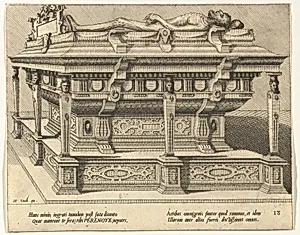
Medium
Etching; first state of four
Dimensions
sheet: 6 9/16 x 8 1/4 in. (16.6 x 20.9 cm)
Classification
Prints|Ornament & Architecture
Department
Drawings and Prints
Museum
Metropolitan Museum of Art, New York, NY
Credit
Purchase, Phyllis D. Massar Gift, 2011
Accession Number
2011.510.18
Rights
Public Domain
Tags
About this artwork
This prints|ornament & architecture titled "Cœnotaphiorum (18)" by Hans Vredeman de Vries|Johannes van Doetecum I|Lucas van Doetecum|Hieronymus Cock dates to 1563. Executed in etching; first state of four, this work exemplifies the craftsmanship associated with Drawings and Prints. The piece demonstrates the technical skill and artistic vision characteristic of its period. The work's presence in a major museum collection attests to its significance in the broader narrative of art history. As par...
Art Historical Context
In 1563, Hans Vredeman de Vries a leading Northern Mannerist architect and, collaborated with engravers Johannes and Lucas van Doetecum and Hieronymus Cock to *Cœnotaphiorum (18)*, the eighteenth plate in a celebrated series of fantastical cenotaph designs These intricate etchings depict elaborate funerary monuments—empty tombs honoring the deceased—blending soaring architecture with macabre elements like corpses, reflecting the era's fascination with mortality, perspective, and grotesque ornamentation. Produced in Antwerp during the Renaissance, the print measures a compact 6 9/16 x 8 1/4 inches, making it an accessible model for architects, sculptors, and patrons across Europe. This first-state etching showcases the van Doetecum brothers' virtuoso technique, with fine, shimmering lines capturing Vredeman's illusory depth and architectural bravura. Etching's fluid precision allowed for unprecedented detail in ornamental motifs, from twisted columns to skeletal figures, emblematic of Mannerist exaggeration and the Antwerp print trade's innovations. Hieronymus Cock's Quatre Vents workshop disseminated such prints, fueling the spread of Renaissance ideas amid religious turmoil. Housed in the Metropolitan Museum of Art's Drawings and Prints department (Phyllis D. Massar Gift, 2011), this rare early impression highlights 16th-century printmaking's role in design dissemination. It invites visitors to ponder how art intertwined death, ingenuity, and spectacle in the Dutch Golden Age's prelude.