
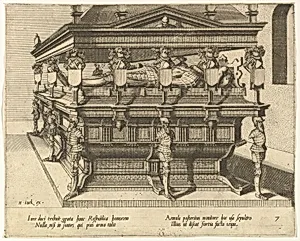
Cœnotaphiorum (7)
Medium
Etching; first state of four
Dimensions
sheet: 6 11/16 x 8 1/4 in. (17 x 20.9 cm)
Classification
Prints|Ornament & Architecture
Department
Drawings and Prints
Museum
Metropolitan Museum of Art, New York, NY
Credit
Purchase, Phyllis D. Massar Gift, 2011
Accession Number
2011.510.7
Rights
Public Domain
Tags
Art Historical Context
Behold *Cœnotaphiorum (7)*, a captivating etching from 1563, part of a series of fantastical cenotaph designs—elaborate, empty tomb monuments—crafted in the vibrant Antwerp printmaking scene. Designed by architect and artist Hans Vredeman de, renowned for his intricate perspective views and ornamental architecture, it was masterfully etched by the van Doetecum brothersJohannes I and Lucas) and published by Hieronymus Cock. This-state impression, measuring just 6 11/16 x 8 1/4 inches, showcases towering architectural fantasies adorned with graceful caryatids—female figures serving as columns—evoking the grandeur of ancient Roman and Renaissance ideals. In the Northern Renaissance, such prints were revolutionary, disseminating sophisticated Mannerist designs across Europe when actual monuments were rare and costly. Vredeman's precise lines and the etchers' delicate burin work capture illusory depth and lavish decoration, blending Gothic intricacy with classical motifs. These works influenced architects, goldsmiths, and designers, embodying the era's fascination with antiquity and virtuosic display. Today, at The Metropolitan Museum of Art (acquired via the Phyllis D. Massar Gift in 2011), this rare early state invites visitors to marvel at 16th-century ingenuity, where paper became a stage for monumental dreams.