
Coffin of Ahhotep Tanodjmu
Unknown Artist
ca. 1550–1458 B.C.
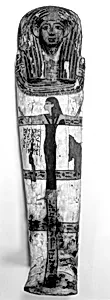
Medium
Wood (ficus sycomorus), paint, paraffin, mortar, plaster, stucco
Dimensions
L. 188 cm (74 in); W. 49 cm (19 5/16 in); H. 65 cm (25 9/16 in)
Classification
Coffin, anthropoid, Ahhotep Tanodjmu
Period
New Kingdom
Department
Egyptian Art
Museum
Metropolitan Museum of Art, New York, NY
Credit
Rogers Fund, 1912
Accession Number
12.181.303a, b
Rights
Public Domain
Tags
Art Historical Context
This elegant anthropoid coffin, created during Egypt’s early New Kingdom (Dynasty 18, ca. 1550–1458 B.C.), belonged to a woman named Ahhotep Tanodjmu. The period marked the reunification of Egypt after the Hyksos occupation and the dawn of an era celebrated for its artistic refinement and renewed emphasis on the afterlife. Such coffins served not merely as containers but as personalized vessels meant to safeguard the deceased and ensure their successful journey through the underworld. Crafted from sycamore fig wood—a material valued for its availability and symbolic association with the goddess Nut—the coffin was coated with layers of plaster, stucco, and paint. Intricate hieroglyphic inscriptions and decorative motifs would have covered its surface, invoking protective spells and identifying the occupant. Traces of modern paraffin indicate careful conservation, underscoring the object’s survival across millennia. Today in the Metropolitan Museum’s collection, the coffin offers visitors a vivid glimpse into ancient Egyptian beliefs about immortality and the meticulous artistry devoted to preparing for eternity.