
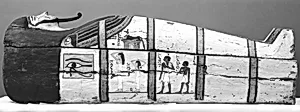
Coffin of Ahmose
Unknown Artist
ca. 1550–1458 B.C.
Medium
Sycomore wood, stucco, paint
Dimensions
L. 229 cm (90 3/16 in); h. 60 cm (23 5/8 in)
Classification
Coffin, Ahmose, anthropoid
Period
New Kingdom
Department
Egyptian Art
Museum
Metropolitan Museum of Art, New York, NY
Credit
Gift of the Earl of Carnarvon, 1914
Accession Number
14.10.2a, b
Rights
Public Domain
Tags
Art Historical Context
Step into ancient Egypt with the *Coffin of Ahmose*, a striking artifact from the New Kingdom's early Dynasty 18, to around 1550–1458 B.C. Crafted an individual named Ahmose—possibly evoking the founder of this dynasty, Ahmose I, who liberated Egypt from Hyksos rule—this coffin reflects the era's resurgence of pharaonic power and elaborate afterlife beliefs. Measuring nearly 7.5 feet long, it was designed to encase the, ensuring the deceased's safe journey to eternity amid Thebes' thriving temples and tombs. Fashioned from sycomore fig wood, a durable native timber, the coffin was coated in stucco and vividly painted—a technique that allowed intricate designs to endure millennia. Tags hint at its decorations: protective wadjet eyes for vigilance in the afterlife, depictions of animals symbolizing deities or offerings, and figures of men and women, perhaps guardians or the deceased's family. These elements underscore Egyptian artistry's focus on magic and symbolism, blending craftsmanship with spiritual function during a golden age of innovation. Generously gifted to the Metropolitan Museum of Art in 1914 by the Earl of Carnarvon—later famed for Tutankhamun's tomb—this coffin offers a window into elite burial practices, reminding us how ancient Egyptians invested artistry in immortality.