
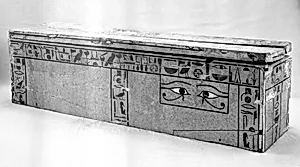
Coffin of Hekaib-Hapy
Unknown Artist
ca. 1640–1550 B.C.
Medium
Sycomore wood
Dimensions
a) Coffin l. 186 cm (73 1/4 in); w. 45 cm (17 11/16 in); h. 46 cm (18 1/8 in); b) Lid l. 186 cm (73 1/4 in); w. 45 cm (17 11/16 in); th. 5.5 cm (2 3/16 in)
Classification
Coffin
Period
Second Intermediate Period
Department
Egyptian Art
Museum
Metropolitan Museum of Art, New York, NY
Credit
Rogers Fund, 1932
Accession Number
32.3.427a, b
Rights
Public Domain
Tags
Art Historical Context
Step into the ancient world with the *Coffin of Hekaib-Hapy*, a poignant artifact from Egypt's Second Intermediate Period (ca. 1640–1550 B.C.), specifically Dynasty 13. Crafted during a time of political fragmentation—when southern rulers in Thebes vied for power against northern invaders—this coffin belonged to Hekaib-Hapy, likely a local elite whose name evokes protection and the Nile's bounty. Now housed in the Metropolitan Museum of Art's Egyptian Art department (acquired via the Rogers Fund in 1932), it measures an imposing 186 cm long, designed to cradle the deceased through eternity. Fashioned from sycomore wood, a durable and spiritually resonant material from the sycamore fig tree symbolizing renewal, the coffin and its lid bear intricate hieroglyphs. These sacred inscriptions, a hallmark of Egyptian funerary art, served as spells and prayers to safeguard the ka (life force) and guide the soul in the afterlife. Unlike the grander royal sarcophagi of the Old Kingdom, Dynasty 13 coffins reflect regional craftsmanship: simpler yet profoundly ritualistic, emphasizing personal resurrection amid societal upheaval. This coffin offers a window into everyday immortality rituals of non-royal Egyptians, blending artistry with deep cultural beliefs in the afterlife. Its preservation reveals how wood carving and hieroglyphic painting merged to defy mortality, inviting us to ponder Hekaib-Hapy's eternal voyage.