
Coin
Unknown Artist
8th–9th century
Medium
Copper
Dimensions
Diam. 13/16 in. (2 cm) Th. 1/8 in. (0.3 cm) Wt. 22 gr (1.426g)
Classification
Coins
Department
Islamic Art
Museum
Metropolitan Museum of Art, New York, NY
Credit
Rogers Fund, 1939
Accession Number
39.40.127.17
Rights
Public Domain
Art Historical Context
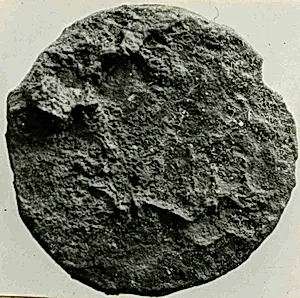
This modest copper coin, dating to the 8th–9th century, a tangible glimpse into the thriving Islamic world during the Umayyad and Abbasid caliphates. Measuring just 13/16 inch in diameter and weighing a mere 1.4 grams, it exemplifies the practical artistry of ancient minting, struck from engraved dies to create raised designs on both faces. Housed in the Metropolitan Museum Art's Department of Islamic Art, it acquired through the Rogers Fund in 9, highlighting its value as a historical artifact. In an era of vast imperial expansion from Spain to Central Asia, such coins fueled trade along the Silk Road and beyond, standardizing the economy under Islamic rule. Early Islamic coinage broke from Byzantine and Sasanian precedents by featuring purely Arabic inscriptions—often including the caliph's name, mint location, and Hijri date—reflecting a cultural shift toward aniconism, or the avoidance of human and animal imagery in religious contexts. As a miniature canvas of calligraphy, this coin showcases the elegance of Kufic script, blending functionality with aesthetic refinement. For visitors, it evokes the ingenuity of medieval artisans who compressed history into a palm-sized form, bridging art, commerce, and faith in one enduring object.