
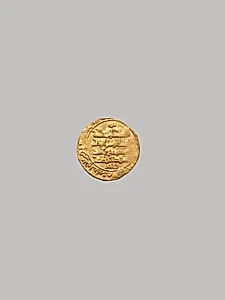
Coin
Unknown Artist
dated A.H. 493/ 1099 CE
Medium
Gold
Dimensions
Diam. 7/8 in. (2.2 cm) Wt. 0.1 oz. (2.8 g)
Classification
Coins
Department
Islamic Art
Museum
Metropolitan Museum of Art, New York, NY
Credit
Rogers Fund, 1939
Accession Number
39.40.127.203
Rights
Public Domain
Art Historical Context
This exquisite gold coin, minted in A.H. 493 (1099 CE), offers a tangible glimpse into the vibrant Islamic world at the turn of the 12th century. Measuring just 7/8 inch (2.2 cm) in diameter and weighing a mere 0.1 oz. (2.8 g), it exemplifies the precision of medieval Islamic minting techniques. Struck from high-purity gold—a dinar standard—this diminutive artifact was both currency and a symbol of economic sophistication, circulating across vast trade networks from the Mediterranean to India. Historically, 1099 CE marked a tumultuous era, coinciding with the First Crusade's capture of Jerusalem, amid the rivalries of the Fatimid Caliphate, Seljuk Turks, and emerging powers. Islamic coins like this one typically bore intricate Arabic inscriptions—caliphal names, mint locations, and dates—reflecting aniconic traditions that prioritized calligraphy as high art. Rather than portraits, these designs conveyed authority, faith, and legitimacy through elegant Kufic or Naskh scripts. As part of the Metropolitan Museum of Art's Islamic Art collection (acquired via the Rogers Fund in 1939), this coin highlights the cultural importance of numismatics in preserving history. It invites us to ponder the hands that exchanged it—merchants, rulers, travelers—bridging art, economy, and empire in a golden gleam.