
Dinar
Unknown Artist
dated A.H. 79/ 698–99 CE
Medium
Gold
Dimensions
Diam. 13/16 in. (2.1 cm)
Classification
Coins
Department
Islamic Art
Museum
Metropolitan Museum of Art, New York, NY
Credit
Bequest of Joseph H. Durkee, 1898
Accession Number
99.35.2386
Rights
Public Domain
Tags
Art Historical Context
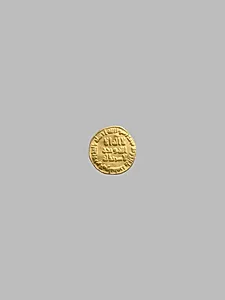
This exquisite gold dinar, minted in A.H. 79 (698–99 CE), represents of the earliest standardized coins of the Umayyad Caliphate, a pivotal in Islamic history. Measuring just 2.1 cm in diameter its petite size belies its immense value as a medium of exchange across the vast Muslim world, from the Middle East to North Africa and beyond. Crafted from pure gold—a material symbolizing wealth and stability—this coin reflects the caliphate's economic reforms under rulers like Abd al-Malik, who sought to unify currency and assert Islamic identity. What stands out in its artistry is the elegant Arabic calligraphy, likely in the angular Kufic script typical of the time, adorning both sides. Eschewing human or animal imagery in favor of inscriptions quoting the Quran, it embodies the aniconic aesthetic of early Islamic art, blending functionality with profound religious symbolism. These dinars facilitated trade along the Silk Road and Mediterranean routes, underscoring the caliphate's role as a global economic powerhouse. Today, housed in the Metropolitan Museum of Art's Islamic Art department through the 1898 bequest of Joseph H. Durkee, this coin offers a tangible glimpse into a transformative age, where monetary innovation intertwined with cultural and spiritual ideals.