
Coin
Unknown Artist
8th century
Medium
Copper
Classification
Coins
Department
Islamic Art
Museum
Metropolitan Museum of Art, New York, NY
Credit
Rogers Fund, 1939
Accession Number
39.40.127.209
Rights
Public Domain
Art Historical Context
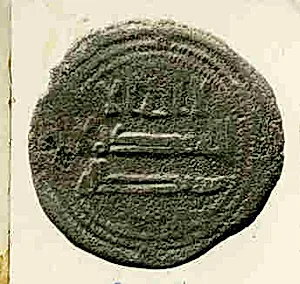
This 8th-century copper coin, housed in the Metropolitan Museum of Art's Islamic Art department, offers a tangible glimpse into the early Islamic world. Struck during a pivotal era of expansion under the Umayyad or early Abbasid caliphates, it exemplifies the standardized coinage that facilitated vast trade networks from Spain to Central Asia. Acquired through the Rogers Fund in 1939, this modest artifact belies its role as a cornerstone of economic and political history. Crafted from durable copper—a practical medium for everyday transactions—the coin likely features Arabic inscriptions rather than figural imagery, reflecting Islam's emphasis on aniconism and the power of the written word. Early Islamic minting techniques involved hammering metal blanks between engraved dies, ensuring uniformity and imperial messaging, such as the caliph's name or religious phrases like the Shahada. Beyond commerce, such coins symbolized caliphal authority and cultural unity, circulating messages of faith and governance. For visitors, this unassuming piece connects us to the ingenuity of medieval Islamic artisans, whose monetary innovations influenced global economies for centuries.