
Coin
Unknown Artist
A.H. 141–54/758–68 CE
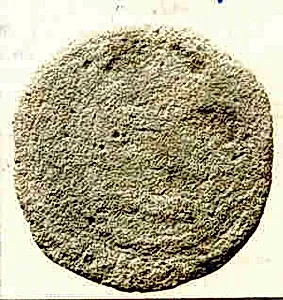
Medium
Copper
Classification
Coins
Department
Islamic Art
Museum
Metropolitan Museum of Art, New York, NY
Credit
Rogers Fund, 1939
Accession Number
39.40.127.531
Rights
Public Domain
Art Historical Context
This modest copper coin, minted during the early Abbasid CaliphateA.H. 141–54/758–68 CE), a tangible glimpse into the bustling Islamic world of the 8th century. Struck shortly after the Abbasids overthrew the Umayyads in 750 CE, it reflects a pivotal era of political consolidation and cultural flourishing under caliphs like al-Mansur, who founded Baghdad as the new capital. As a common medium of exchange, such coins—known as *fals*—circulated widely in markets from Mesopotamia to the Mediterranean, facilitating trade in spices, textiles, and grains. Crafted from durable copper, the coin exemplifies the practical artistry of Islamic numismatics. Early Abbasid issues often featured Arabic inscriptions with the caliph's name, mint location, and date, marking a shift toward purely epigraphic designs that avoided human or animal imagery in line with evolving Islamic aniconism. This technique of die-stamping allowed for mass production, blending functionality with subtle aesthetic refinement through elegant Kufic script. Housed in the Metropolitan Museum of Art's Islamic Art department (Rogers Fund, 1939), this artifact underscores coins' role as historical documents. They preserved language, authority, and economic life, bridging distant regions in a vast empire and inviting us to ponder the everyday pulse of medieval Islam.