
Coin
Unknown Artist
dated A.H. 139/ 756 CE
Medium
Copper
Classification
Coins
Department
Islamic Art
Museum
Metropolitan Museum of Art, New York, NY
Credit
Rogers Fund, 1939
Accession Number
39.40.127.535
Rights
Public Domain
Art Historical Context
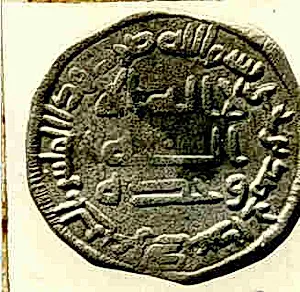
This copper coin, struck in A.H. 139 (756 CE), hails from the early Abbasid Caliphate, a pivotal era in Islamic history marking the shift from Umayyad to Abbasid rule. The Abbasids, centered in Baghdad, ushered in a golden age of science, art, and administration, and their coinage reflected this new imperial confidence. Dated precisely to the reign of Caliph al-Mansur (r. 754–775 CE), this piece likely originated from a major mint like Baghdad or Basra, serving as everyday currency in a vast empire stretching from Spain to Central Asia. Crafted through the ancient technique of striking—hammering a die onto a metal flan—this unassuming copper fals exemplifies Islamic numismatic artistry. Eschewing figural images in favor of elegant Arabic calligraphy, it bore inscriptions of the caliph's name, titles, mint mark, and date, embodying the aniconic aesthetic of Islamic art. These coins were more than money; they were portable propaganda, standardizing weights and purity to fuel trade along the Silk Road and Indian Ocean routes. Today, at the Metropolitan Museum of Art (acquired via the Rogers Fund in 1939), this coin offers a tangible glimpse into Abbasid daily life, economic prowess, and cultural refinement, reminding us how even small artifacts chronicle grand histories.