
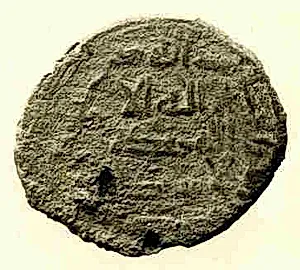
Coin
Unknown Artist
dated A.H. 164/ 780 CE
Medium
Copper
Classification
Coins
Department
Islamic Art
Museum
Metropolitan Museum of Art, New York, NY
Credit
Rogers Fund, 1939
Accession Number
39.40.127.536
Rights
Public Domain
Art Historical Context
This unassuming copper coin, minted in A.H. 164 (780 CE), offers a window into the vibrant world of early Islamic commerce and culture. Produced during the Abbasid Calate—a golden age of scholarship and expansion—this small artifact served as everyday currency, circulating through bustling markets from Baghdad to beyond. Its classification as a coin underscores the practical artistry of the Islamic world, where money was both economic tool and cultural emblem. Crafted via the ancient technique of striking metal between engraved dies, the coin likely bears intricate Arabic inscriptions, a hallmark of Islamic numismatics pioneered in the late 7th century. These epigraphic designs—featuring dates, mint names, and Quranic phrases—reflected aniconic principles, prioritizing script over imagery and blending faith with fiscal authority. Such coins fueled trade along the Silk Road, linking distant realms. Generously acquired via the Rogers Fund in 1939 for the Metropolitan Museum of Art's Islamic Art department, this piece invites us to appreciate how humble objects preserved history's pulse, whispering tales of caliphal power and daily life over 1,200 years ago.