
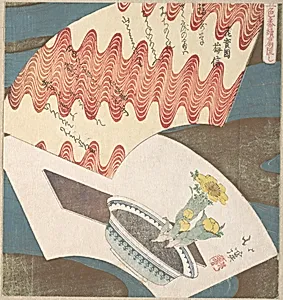
Conventionalized Design of Fans Floating on the River
19th century
Medium
Woodblock print (surimono); ink and color on paper
Dimensions
7 1/16 x 6 5/8 in. (17.9 x 16.8 cm)
Classification
Prints
Culture & Period
Japan · Edo period (1615–1868)
Department
Asian Art
Museum
Metropolitan Museum of Art, New York, NY
Credit
H. O. Havemeyer Collection, Bequest of Mrs. H. O. Havemeyer, 1929
Accession Number
JP2093
Rights
Public Domain
Tags
Art Historical Context
**Conventionalized Design of Fans Floating the River** by Totoya Hokkei captures the whimsical elegance of Edo-period Japan in a delicate woodblock print known as *surimono*. Created in the 19th century during the vibrant Edo period (1615–1868), this intimate work measures just 7 1/16 x 6 5/8 inches, of *surimono*—luxurious, privately commissioned prints often made for New Year's greetings, poetry gatherings, or special occasions. Hokkei, a skilled ukiyo-e artist and pupil of the famed Katsushika Hokusai, excelled in these refined pieces, blending intricate designs with poetic flair. The title evokes a playful scene of fans adrift on a river, adorned with stylized flowers that highlight the tag's floral motif. Rendered in vibrant ink and color on paper, the print showcases advanced woodblock techniques: precise carving for fine lines, subtle gradations of color (*bokashi*), and possibly metallic accents or embossing for a tactile, shimmering effect. These methods elevated *surimono* above standard ukiyo-e, making them treasured keepsakes among Japan's literati. Housed in the Metropolitan Museum of Art's Asian Art Department from the H. O. Havemeyer Collection, this piece reflects the cultural sophistication of urban Edo life, where art intertwined with seasonal festivities and nature's beauty. A charming window into Japan's printmaking golden age! (198 words)
About the Artist
Totoya Hokkei · 1780–1850
Totoya Hokkei (魚屋 北渓, 1780–1850), born Iwakubo Tatsuyuki in Edo (modern Tokyo), began his life as a humble fishmonger in the Yotsuya Samegahashi district, a trade reflected in his art name "Totoya," meaning fish shop. He transitioned to art through rigorous training, first studying under Kanō Yōsen'in Korenobu, head of the Kobikichō branch of the prestigious Kanō school, where he honed landscape p...