
Pruimenbloesem uit Osaka
1823
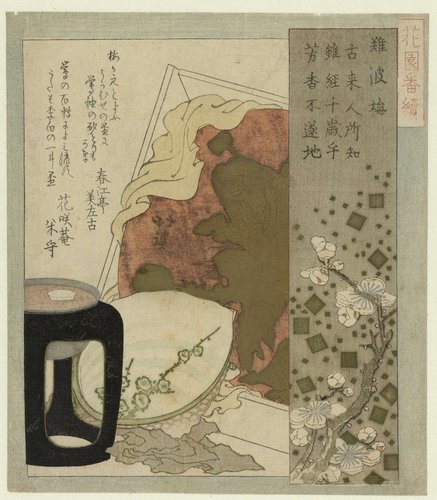
Medium
nishikie, with metallic pigments and blindprinting
Dimensions
175; 200
Rights
Public Domain
About this artwork
collector's mark, verso, stamped: Lugt 2228
Art Historical Context
**Pruimenbloesem uit Osaka (Plum Blossoms from)** *Totoya Hokkei, 1823* Step into the delicate world of early 19th-century Japan with Totoya Hokkei's *Pruimenbloesem uit Osaka*, a charming ukiyo-e woodblock capturing the fleeting beauty of plum blossoms. Created the Edo period, when artists celebrated nature's ephemeral moments amid urban life's "floating world," Hokkei skilled pupil of the master Katsushika Hokusaiexcelled in intimate surimono prints like this one. These custom commissions, often for poetry circles or New Year's greetings, evoked renewal and resilience, as plum blossoms symbolize perseverance blooming in late winter. This nishikie, or "brocade picture," showcases luxurious printing techniques: vibrant colors layered through intricate woodblocks, enhanced by shimmering metallic pigments for a jewel-like glow and blindprinting (gauffrage) for subtle embossed textures that invite touch. At a compact 200 × 175 mm, it's perfectly sized for personal appreciation, reflecting Osaka's thriving print culture as a hub for such refined artistry. A collector's mark on the verso (Lugt 2228) hints at its esteemed provenance, linking it to renowned connoisseurs. Hokkei's work bridges everyday poetry with technical virtuosity, offering visitors a window into Japan's golden age of printmaking. (198 words)
About the Artist
Totoya Hokkei · 1780–1850
Totoya Hokkei (魚屋 北渓, 1780–1850), born Iwakubo Tatsuyuki in Edo (modern Tokyo), began his life as a humble fishmonger in the Yotsuya Samegahashi district, a trade reflected in his art name "Totoya," meaning fish shop. He transitioned to art through rigorous training, first studying under Kanō Yōsen'in Korenobu, head of the Kobikichō branch of the prestigious Kanō school, where he honed landscape p...