
Hanazono bantsuzuki
1823
Medium
nishikie, with metallic pigments and blindprinting
Dimensions
184; 205
Rights
Public Domain
About this artwork
kleurenhoutsnede; blinddruk; lijnblok in zwart met kleurblokken; metaalpigmenten
Art Historical Context
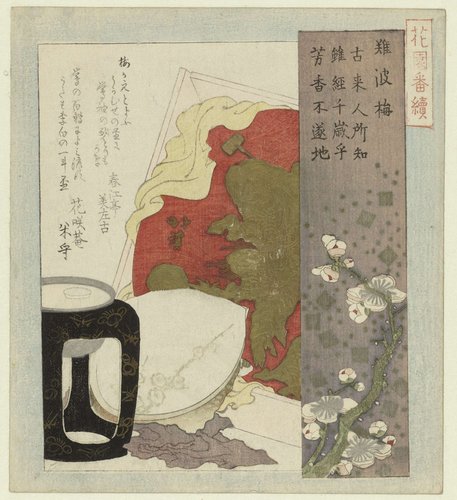
**Hanazono bantsuzuki** is a delicate *nishikie* (brocade print) by Totoya Hokkei, prominent Japanese ukiyo-e artist and pupil of the master Katsushika Hokusai. Created in 1823 during Japan's Edo period, this color woodblock print measures a modest 205mm by 184mm, typical of intimate *surimono*—luxury prints often commissioned for private occasions like New Year's greetings. Hokkei's work reflects the "floating world" ethos of ukiyo-e, capturing fleeting beauty in everyday scenes, though the exact subject here evokes a poetic flower garden (*hanazono*), blending nature's elegance with artistic finesse. The print's brilliance stems from advanced techniques: a black line block (*lineblok*) provides crisp outlines, overlaid with vibrant color blocks (*kleurblokken*) for the hallmark *nishikie* richness. Metallic pigments shimmer like gold or silver, enhancing opulence, while blindprinting (*blinddruk* or *karazuri*) adds subtle embossed textures without ink, creating a tactile, three-dimensional effect. These methods elevated woodblock printing from mass production to fine art, showcasing the collaborative genius of Edo artisans. In cultural context, such prints were treasures of 19th-century Japan, symbolizing refinement amid strict social hierarchies. Hokkei's innovation helped bridge ukiyo-e toward modernism, influencing global printmaking. Visitors, imagine holding this gem—its metallic glow and embossed blooms whispering of a vibrant, ephemeral world.
About the Artist
Totoya Hokkei · 1780–1850
Totoya Hokkei (魚屋 北渓, 1780–1850), born Iwakubo Tatsuyuki in Edo (modern Tokyo), began his life as a humble fishmonger in the Yotsuya Samegahashi district, a trade reflected in his art name "Totoya," meaning fish shop. He transitioned to art through rigorous training, first studying under Kanō Yōsen'in Korenobu, head of the Kobikichō branch of the prestigious Kanō school, where he honed landscape p...