
Convivio delle Belle Donne, page 22 (recto)
August 1532
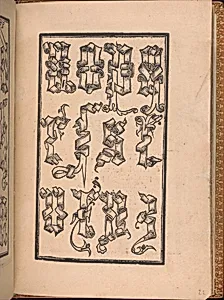
Medium
Woodcut
Dimensions
Overall: 7 7/8 x 5 1/2 in. (20 x 14 cm)
Classification
Books|Prints|Ornament & Architecture
Department
Drawings and Prints
Museum
Metropolitan Museum of Art, New York, NY
Credit
Rogers Fund, 1922
Accession Number
22.66.6(42)
Rights
Public Domain
Art Historical Context
Step into the vibrant world of Renaissance Venice with *Convivio delle Belle Donne, 22 (recto)*, a woodcut print by Nicolò Zoppino and da Treviso in August1532. This intimate page, measuring just 7 7/8 x 5 1/2 inches, captures the spirit of early 16th-century Italian decorative arts, blending graceful female figures with ornamental motifs in a compact, book-friendly format. Woodcuts like this one were revolutionary for their time, enabling affordable reproduction of intricate designs through carved wooden blocks inked and pressed onto paper. As part of a book classified under Prints, Ornament & Architecture, it likely showcases elegant women gathered in a convivial scene—evoking the Italian "convivio" or banquet—framed by architectural flourishes. Zoppino, a prolific Venetian publisher, collaborated with artists like Matteo da Treviso to produce such pattern books, which inspired craftsmen in textiles, ceramics, and interiors across Europe. Acquired through the Rogers Fund in 1922 and housed in The Metropolitan Museum of Art's Drawings and Prints department, this piece highlights the era's fascination with beauty, symmetry, and the fusion of human form with decorative architecture. It's a delightful glimpse into how Renaissance printmakers democratized sophisticated design for everyday admiration.
About the Artist
Nicolò Zoppino|Matteo da Treviso · 1478–1544
Nicolò Zoppino was an Italian printer and publisher active in Venice and other Italian cities during the first half of the sixteenth century, occupying an important place in the history of early printing and book illustration. Born around 1478, he worked during the golden age of Venetian printing, a period when the city was the dominant center of book production in Europe and publishers competed t...