
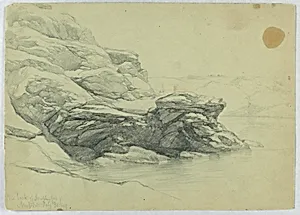
Cove Back of Dumpling Fort, Newport
July 30, 1849
Classification
landscapes
Department
Smithsonian Collection
Museum
Smithsonian American Art Museum
Credit
Bequest of Erskine Hewitt
Accession Number
1942-50-458
Rights
Public Domain
About this artwork
Research in Progress
Art Historical Context
Daniel Huntington's *Cove Back of Dum Fort, Newport*, painted on July 30, 1849, invites visitors to a serene corner of coastal Rhode Island. This landscape captures the tranquil cove nestled behind Dumpling Fort in Newport, a historic site overlooking Narragansett Bay. Huntington, a prominent American artist (1816–1906) and Academy of Design member, often explored the nation's natural beauty early in his career, blending observation with Romantic ideals of sublime scenery. Created during the mid-19 century's Hudson River School era—though Huntington was better known for portraits and history paintings—this work reflects a growing American fascination with unspoiled landscapes amid rapid industrialization. The specific date suggests it may have been sketched en plein air, a technique gaining popularity among artists seeking authenticity in light and atmosphere. Dumpling Fort's rocky shores and shimmering waters evoke Newport's maritime heritage, a hub for trade and leisure. Now in the Smithsonian American Art Museum through the bequest of Erskine Hewitt, this piece highlights Huntington's versatility and contributes to our understanding of 19th-century American plein-air traditions. Though research continues, it stands as a quiet testament to the enduring allure of New England's coast.