
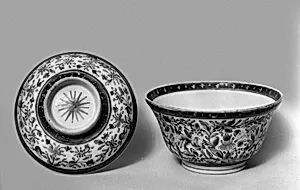
Covered bowl with floral pattern
Unknown Artist
19th century
Medium
Porcelain painted in overglaze polychrome enamels (Bencharong ware for Thai market)
Dimensions
H. 3 1/4 in. (8.3 cm); Diam. 4 in. (10.2 cm)
Classification
Ceramics
Culture & Period
China · Qing dynasty (1644–1911)
Department
Asian Art
Museum
Metropolitan Museum of Art, New York, NY
Credit
Avery Fund, 1909
Accession Number
09.70.85a, b
Rights
Public Domain
Art Historical Context
This exquisite covered bowl, crafted in 19th-century China the Qing dynasty (16441911), exemplifies Bencharong ware—porcelain specially produced for the Thai market. just 3¼ inches high and 4 inches in diameter, its petite form made it ideal for serving sweets, condiments, or precious spices in elite Thai households. The floral pattern, painted in vibrant overglaze polychrome enam, bursts with color after a secondary low-temperature firing, creating a luminous, jewel-like effect that has endured for centuries. Bencharong, meaning "five colors" in Thai, highlights the sophisticated technique of applying enamel pigments over the fired glaze, a hallmark of Qing export porcelain. Produced in Jingdezhen kilns, these wares blended Chinese mastery with Thai aesthetic preferences for bold florals and mythical motifs, fostering cultural exchange along maritime trade routes. Though the artist remains unknown, such pieces reflect the dynasty's booming export industry, catering to Southeast Asian royalty. Acquired through the Avery Fund in 1909 for the Metropolitan Museum of Art's Asian Art collection, this bowl offers a window into Qing ingenuity and cross-cultural luxury, reminding us how everyday objects carried artistic prestige across continents.