
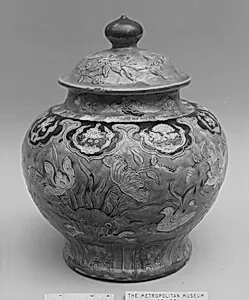
Covered Jar
Unknown Artist
16th century
Medium
Porcelain
Dimensions
H. 17 in. (43.2 cm)
Classification
Ceramics
Culture & Period
China · Ming dynasty (1368–1644)
Department
Asian Art
Museum
Metropolitan Museum of Art, New York, NY
Credit
Bequest of John L. Cadwalader, 1914
Accession Number
14.58.236a, b
Rights
Public Domain
Tags
Art Historical Context
This elegant covered jar, standing at 17 inches (43.2 cm) tall, exemplifies the masterful porcelain production of China's Ming dynasty (1368–1644), specifically from the 16th century. Crafted by an unknown artist, it hails from the vibrant kilns likely in Jingdezhen, the epicenter of imperial porcelain manufacturing. The jar's form—practical yet refined, with a fitted lid—served both utilitarian and ceremonial purposes in elite households, holding precious spices, teas, or oils. Ming porcelain represents a pinnacle of ceramic artistry, achieved through high-temperature firing that yields the material's signature translucent, resonant body and brilliant white glaze. Delicate motifs of birds and flowers, painted with precision, adorn its surface, evoking themes of harmony, prosperity, and the natural world's beauty in Chinese culture. These symbolic designs, rooted in scholarly painting traditions, reflect the era's fusion of artistry and philosophy, often produced for the imperial court or export via the Silk Road. Now housed in the Metropolitan Museum of Art's Asian Art Department through the 1914 bequest of John L. Cadwalader, this jar invites us to marvel at Ming innovation—porcelain so prized it sparked global trade and imitation. A timeless treasure!