
Covered Jar
Unknown Artist
18th century
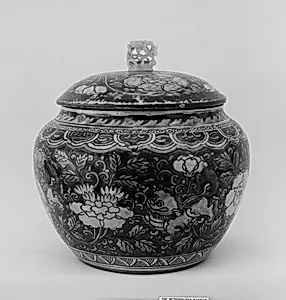
Medium
Clay covered with a crackled glaze and decorated with polychrome enamels (Hizen ware, Kutani type)
Dimensions
H. 3 in. (7.6 cm); W. 3 in. (7.6 cm)
Classification
Ceramics
Culture & Period
Japan · Edo period (1615–1868)
Department
Asian Art
Museum
Metropolitan Museum of Art, New York, NY
Credit
Purchase by subscription, 1879
Accession Number
79.2.935a, b
Rights
Public Domain
Tags
Art Historical Context
This delicate Covered Jar, crafted by an unknown artist in 18th-century Japan during the Edo period (161–1868), exemplifies refined artistry of Hizen ware in the Kutani type. Standing just 3 inches (7.6 cm) tall and wide its petite form was likely designed for intimate display or use in tea ceremonies, adorned with vibrant motifs of animals and flowers rendered in polychrome enamels over a distinctive crackled glaze. Acquired by the Metropolitan Museum of Art through subscription purchase in 1879 it now graces the Asian Art department as a testament to Japan's ceramic mastery. The jar's medium—clay coated with a crackled glaze and multicolored enamels—highlights innovative overglaze techniques popular in Kutani-style ceramics from the Hizen region (modern Arita). The crackle effect, formed by uneven cooling, adds texture and depth, while the enamels provide vivid, layered colors that capture nature's exuberance, from blooming flowers to lively creatures. This fusion of form and decoration reflects Edo-era porcelain's evolution toward bold, decorative exuberance. Culturally, such jars embodied Japan's aesthetic of wabi-sabi—embracing imperfection in the glaze—while showcasing export-quality craftsmanship that captivated global collectors. A charming survivor of its time, it invites visitors to appreciate the quiet elegance of everyday Edo luxury.