
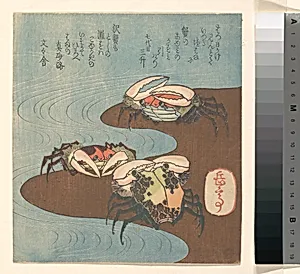
Crabs Near the Water's Edge
ca. 1830
Medium
Woodblock print (surimono); ink and color on paper
Dimensions
8 x 7 5/16 in. (20.3 x 18.6 cm)
Classification
Prints
Culture & Period
Japan · Edo period (1615–1868)
Department
Asian Art
Museum
Metropolitan Museum of Art, New York, NY
Credit
Rogers Fund, 1919
Accession Number
JP1138
Rights
Public Domain
Tags
Art Historical Context
Yashima Gakutei'sCrabs Near the Water Edge* (ca. 1830) is a delicate woodblock from Japan's Edo period (16151868), a time when ukiyo-e artists captured the fleeting beauty of nature and daily life. This surimono—a luxurious, privately commissioned print often made for New Year's greetings or poetry circles—depicts crabs scuttling along the shoreline, rendered in vibrant inks and colors on paper. Measuring just 8 x 7 5/16 inches, its intimate scale invites close viewing, revealing Gakutei's mastery as an Osaka-based poet-printmaker who blended realism with poetic whimsy. Surimono like this one stand out for their refined techniques: crisp lines from multiple woodblocks, subtle color gradations (bokashi), and occasional metallic pigments or embossing for a tactile, jewel-like quality. Gakutei, active in the late 18th and early 19th centuries, was renowned for infusing his works with kyōka (humorous poetry), elevating everyday subjects like these crabs into emblems of seasonal transience. In Japanese culture, such prints celebrated nature's rhythms, fostering community among literati patrons. Acquired through the Rogers Fund in 1919, this gem from the Metropolitan Museum of Art's Asian Art collection highlights the Edo era's printmaking zenith, bridging art and ephemera in a single, enchanting frame.
About the Artist
Yashima Gakutei · 1786–1868
Yashima Gakutei (c. 1786–1868), born in Osaka as the illegitimate son of a Tokugawa shogunate samurai named Hirata, adopted the name from his mother's subsequent marriage into the Yashima clan. Little is documented about his early years beyond these familial ties, but he pursued artistic training under the esteemed ukiyo-e masters Totoya Hokkei and Katsushika Hokusai, absorbing their precision in ...