
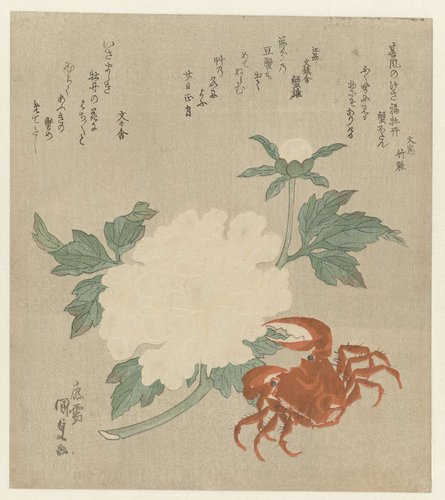
Pioenroos met krab
ca. 1831
Medium
nishikie, with embossing
Dimensions
208; 186
Rights
Public Domain
About this artwork
blad: hoogte 208 mm (shikishiban) x breedte 186 mm
Art Historical Context
**Pioenroos met krab (Peony with Crab)***Utagawa KunisadaI), ca. 1831* This delicate woodblock print by Utagawa Kunis I, a master of the Utagawa school during Japan's Edo period, captures the serene beauty of a blooming peony alongside a crab in the shikishiban format—a, square-ish size (208 × 186 mm) ideal for albums, poetry sheets, or intimate appreciation. Produced around 1831 amid the flourishing ukiyo-e tradition, it reflects the "floating world" aesthetic, blending nature's elegance with subtle symbolism. Peonies, revered in Japanese culture for their lush fullness, often evoke prosperity and bravery, while the crab adds a playful, seasonal touch, possibly nodding to summer imagery or folklore. Kunisada's *nishikie* (brocade picture) technique shines here, employing vibrant multi-color woodblocks for lifelike petals and intricate details. The embossing—raised textures created by pressing damp paper against carved blocks—lends a tactile depth, elevating the print beyond flat imagery and showcasing innovative printing artistry from Edo's skilled workshops. Though Kunisada is famed for bijin-ga (beauty prints) and actor portraits, this nature study highlights his versatility, bridging fine art and popular culture. A gem of early 19th-century Japanese printmaking, it invites visitors to ponder nature's harmony, preserved as a testament to ukiyo-e's enduring allure before stricter Tenpō reforms curbed such vivid expressions.