
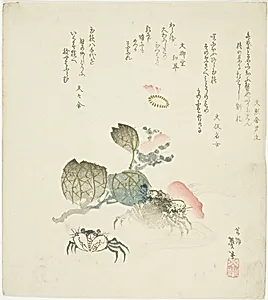
Two crabs by a spray of camellia
late 1820s–early 1830s
Medium
Color woodblock print; shikishiban, surimono
Dimensions
21 × 19 cm (8 5/16 × 7 1/2 in.)
Classification
woodblock print
Department
Arts of Asia
Museum
Art Institute of Chicago
Accession Number
81173
Rights
Public Domain
Art Historical Context
In the intimate format of a *shikishiban* surimono, Katsushika Taito II the delicate interplay of nature in *Two Crabs by a Spray ofellia* (late 1820s–early 1830s). This color woodblock print measuring just 21 × 19 cm, the refined artistry of ukiyo-e, the "pictures of the floating world tradition. Taito II, a pupil of the master Katsushika Hokusai, brings his mentor's precision to life with vibrant reds, subtle greens, and intricate detailing, evoking the seasonal poetry of Japan's Edo period. Surimono prints like this one were luxurious, privately commissioned works, often produced for New Year's greetings or poetry gatherings among the literati. The square *shikishiban* shape and high-quality printing techniques—such as embossing and mica dusting—elevate it beyond commercial ukiyo-e, making it a treasured object for elite patrons. Here, the crabs scuttle realistically beside blooming camellias, symbols of winter resilience and fleeting beauty in Japanese culture, inviting contemplation of nature's transience (*mono no aware*). Housed in the Art Institute of Chicago's Arts of Asia department, this print showcases Taito II's mastery in condensing profound harmony into a small space, bridging everyday observation with artistic elegance. A perfect gem for savoring the quiet wonders of Edo-era aesthetics.