
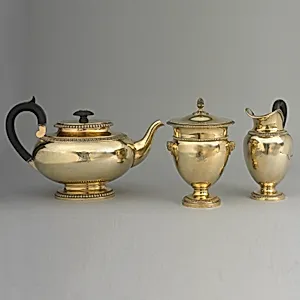
Creamer
ca. 1838
Classification
metalwork
Department
Smithsonian Collection
Museum
Smithsonian American Art Museum
Credit
Gift of Arthur Ross
Accession Number
1980-76-3
Rights
Public Domain
About this artwork
Research in Progress
Art Historical Context
This elegant creamer, dating to around 1838, exemplifies the refined metalwork of early 19th-century America. As a small pitcher designed for serving cream in tea or coffee services, it would have graced the tables of middle- and upper-class households during the antebellum era. Crafted from metal—likely silver, pewter, or a similar alloy common to the period—this functional yet decorative object highlights the skilled artisanship of American silversmiths, who blended practicality with subtle ornamentation to elevate everyday rituals. Though the artist's identity remains unknown and research is ongoing, the creamer's presence in the Smithsonian American Art Museum's collection underscores its value as a snapshot of domestic life and material culture. Donated as a gift from Arthur Ross, it reflects the growing appreciation for vernacular arts that captured the optimism and refinement of Jacksonian America. Visitors might imagine it alongside matching sugar bowls and teapots, symbols of hospitality in a young nation's expanding social customs. (178 words)
About the Artist
Unknown
The artist designated as "Unknown" in our virtual museum's collection exemplifies a poignant chapter in art history: creators whose identities have faded into obscurity despite the enduring power of their work. With only one known artwork attributed to them in our holdings, this figure represents countless anonymous hands that shaped visual culture across centuries. Museums worldwide, including th...