
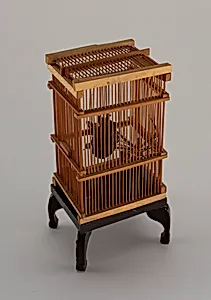
cricket cage and base
late 19th century
Classification
containers
Department
Smithsonian Collection
Museum
Smithsonian American Art Museum
Credit
Gift of Eleanor and Sarah Hewitt
Accession Number
1916-40-3-a,b
Rights
Public Domain
About this artwork
Upright rectangular cage (a) with two parallels and concealed door; attached by small brads to black lacquered wood base (b) with cabriole legs set at angles. Inside cage, imitation black beetle and winged insect (dragon fly?) attached to bars.
Art Historical Context
This delicate cricket cage and its elegant base, dating to the late 19th century exemplifies the intricate craftsmanship of decorative containers from that era. The upright rectangular cage features parallel bars and a cleverly concealed door, secured by brads to a blackquered wood base with gracefully angled cabriole legs nod to rococo influences that lingered into the Victorian period. Inside, imitation insects—a black beetle and a dragonfly—are artfully attached to the bars transforming the piece from a functional vessel into a whimsical display object. Cricket cages like this originated in Chinese culture, where live crickets were cherished pets kept for their soothing chirps, believed to bring good fortune and joy. By the late 1800s, such items captivated Western collectors, reflecting a growing fascination with Asian exotica amid global trade. Though the medium remains unidentified, the lacquered wood and precise metalwork highlight skilled artisanal techniques, blending utility with ornamental charm. A gift to the Smithsonian from collectors Eleanor and Sarah Hewitt, this piece now resides in the Smithsonian American Art Museum's collection of containers. It invites visitors to ponder the cultural exchange of the time, where everyday Eastern traditions inspired Western decorative arts, offering a tiny window into a world of poetic insect companionship.
About the Artist
Unknown
The artist designated as "Unknown" in our virtual museum's collection exemplifies a poignant chapter in art history: creators whose identities have faded into obscurity despite the enduring power of their work. With only one known artwork attributed to them in our holdings, this figure represents countless anonymous hands that shaped visual culture across centuries. Museums worldwide, including th...