
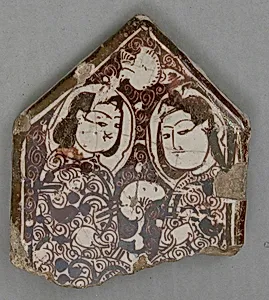
Cross-Shaped Tile Fragment
Unknown Artist
first half 13th century
Medium
Stonepaste; overglaze luster-painted
Classification
Ceramics-Tiles
Department
Islamic Art
Museum
Metropolitan Museum of Art, New York, NY
Credit
Rogers Fund, 1911
Accession Number
11.142.4
Rights
Public Domain
Tags
Art Historical Context
This exquisite *Cross-Shaped Tile Fragment dating to the first half of the13th century, hails from the Islamic world and exemplifies the pinnacle of medieval ceramic innovation. Crafted in stonepaste—a composite of quartz, clay, and glass frit that allowed for thin, translucent bodies mimicking porcelain—the tile was adorned with overglaze-painting. This labor-intensive technique involved applying metallic oxides over a fired glaze, then refiring in a reducing atmosphere to produce a radiant, iridescent sheen caught the light like liquid gold. Such tiles were prized for architectural embellishment in mosques, palaces, and madrasas, transforming spaces into luminous environments. The cross shape and inclusion of human figures, as hinted by its tags, add intrigue. In Islamic art, figurative motifs often appeared in secular or narrative contexts, drawing from Persian or Syrian traditions where storytelling through pottery thrived. This fragment likely once contributed to a larger decorative scheme, showcasing the era's blend of technical mastery and aesthetic splendor amid the flourishing Abbasid and Seljuk influences. Acquired through the Rogers Fund in 1911, it now graces the Metropolitan Museum of Art's Islamic Art department, inviting visitors to ponder the cross-cultural exchanges that shaped medieval artistry. A small piece, yet a window into a vibrant, glittering past.