
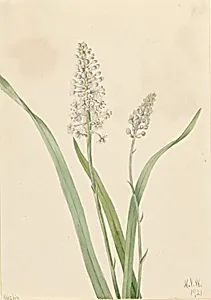
Crowpoison (Chrosperma muscaetoxicum)
Medium
Painting
Classification
Painting
Department
Smithsonian Collection
Museum
Smithsonian American Art Museum
Credit
Smithsonian American Art Museum, Gift of the artist
Accession Number
1970.355.485
Rights
Public Domain
Tags
Art Historical Context
Mary Vaux Walcott'sCrowpoison (Chrosma muscaetoxicum)*, painted in 1921, the delicate yet toxic beauty of this North American wildflower, known for its poisonous properties—particularly to crows, hence its common name. Part of the Smithsonian American Art's collection, this painting was a generous gift from the artist herself, reflecting her passion for documenting the natural world with scientific precision and artistic grace. Walcott, a pioneering naturalist and artist active in the early 20th century, created hundreds of such botanical studies, blending her interests in botany and fine art. Though classified simply as a painting, her works are renowned for their meticulous watercolor technique, which highlights the intricate details of petals, stems, and leaves against subtle backgrounds. This piece exemplifies the era's growing appreciation for scientific illustration as an art form, bridging museums and research institutions. Displayed in the Smithsonian American Art Museum, *Crowpoison* invites visitors to marvel at nature's hidden dangers through Walcott's keen eye, reminding us of the wildflower's role in early American ecology and the artist's enduring legacy in preserving floral biodiversity.