
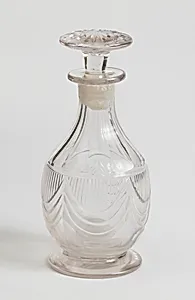
Cruet
ca. 1810
Medium
glasswares
Classification
glasswares
Department
Smithsonian Collection
Museum
Smithsonian American Art Museum
Credit
Bequest of Walter Phelps Warren
Accession Number
1986-61-26-a,b
Rights
Public Domain
About this artwork
Research in Progress
Art Historical Context
This elegant cruet, dating to around 1810, exemplifies 19th-century Americanware craftsmanship. Crafted from glass, it served as a practical vessel for holding oil, vinegar, or other condiments at the dining table, often part of a matching set that reflected the growing sophistication of American households during the Federal period. Though the artist remains unknown, such pieces highlight the burgeoning glassmaking industry in the young United States, where artisans adapted European techniques to local materials and tastes. Glass cruets like this one were typically produced using free-blown or mold-blown methods, allowing for delicate shapes and subtle decorative patterns that elevated everyday tableware into objects of quiet beauty. In an era of post-Revolutionary prosperity, these items symbolized emerging middle-class refinement, bridging utilitarian function with aesthetic appeal. Its presence in the Smithsonian American Art Museum's collection, via the bequest of Walter Phelps Warren, underscores its value as a window into domestic life. Research on this cruet is ongoing, inviting us to ponder its story—perhaps from a New England or Mid-Atlantic glasshouse. Visitors are encouraged to appreciate how such humble artifacts preserve the ingenuity of America's early decorative arts.
About the Artist
Unknown
The artist designated as "Unknown" in our virtual museum's collection exemplifies a poignant chapter in art history: creators whose identities have faded into obscurity despite the enduring power of their work. With only one known artwork attributed to them in our holdings, this figure represents countless anonymous hands that shaped visual culture across centuries. Museums worldwide, including th...