
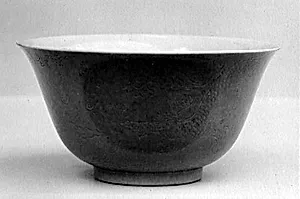
Cup
Unknown Artist
19th century
Medium
Porcelain
Dimensions
H. 2 1/4 in. (5.7 cm); Diam. 4 3/8 in. (11.1 cm)
Classification
Ceramics
Culture
China
Department
Asian Art
Museum
Metropolitan Museum of Art, New York, NY
Credit
Bequest of Mary Clark Thompson, 1923
Accession Number
24.80.310
Rights
Public Domain
Art Historical Context
This delicate porcelain cup from 19th-century China exemplifies enduring mastery of Chinese ceramic artisans, particularly during the Qing dynasty (1644–1912). Measuring just 2¼ inches high and 4⅜ inches in diameter, its petite scale suggests it was designed for intimate use, perhaps for sipping tea—a ritual central to Chinese daily life and social customs. Porcelain, China's greatest contribution to global ceramics, was perfected in the southern kilns of Jingdezhen where kaolin clay and high-fired glazes produced the translucent "white gold" prized worldwide. Though the artist remains unknown, the cup reflects the technical sophistication of the era, when porcelain production reached industrial scales for both domestic and export markets. Its smooth, vitrified surface highlights advancements in glazing and firing techniques that ensured durability and elegance. Entered the Metropolitan Museum of Art through the generous bequest of Mary Clark Thompson in 1923, this unadorned vessel invites us to appreciate the subtle beauty of functional art in Chinese culture. (178 words)