
Cup and saucer
ca. 1770–80
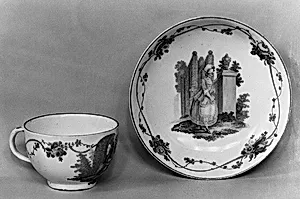
Medium
Hard-paste porcelain
Dimensions
Cup (.96): H. 1-7/8 in. (4.8 cm.) Saucer (.97): Diam. 5 in. (12.7 cm.)
Classification
Ceramics-Porcelain
Culture
German, Ludwigsburg
Department
European Sculpture and Decorative Arts
Museum
Metropolitan Museum of Art, New York, NY
Credit
Gift of Alfred Duane Pell, 1902
Accession Number
02.6.96, .97
Rights
Public Domain
Tags
Art Historical Context
This delicate cup and saucer, by the Ludwigsburgcelain Manufactory around 1770–80, exemplifies the pinnacle of German hard-paste porcelain production. Measuring just 1⅞ inches tall for the cup and inches across the saucer, this petite set was designed for intimate tea rituals, a fashionable social pastime among Europe's elite during the late Rococo and early Neoclassical periods. Adorned with motifs of buildings, women, and—likely delicate painted scenes evoking pastoral idylls or romantic landscapes—the piece showcases the manufactory's skill in combining technical precision with artistic whimsy. Hard-paste porcelain, fired at high temperatures for exceptional durability and translucency, was a closely guarded secret pioneered by German factories like Meissen and rivaled by Ludwigsburg. Established in the mid-18th century under ducal patronage in Württemberg, the Ludwigsburg works produced luxury tableware that rivaled the finest European ceramics, blending intricate overglaze enameling with gilding for vibrant, enduring decoration. These objects symbolized wealth and refinement, often gracing aristocratic salons. Gifted to the Metropolitan Museum of Art in 1902 by Alfred Duane Pell, this set invites visitors to appreciate how everyday luxury bridged art and domestic life, preserving a slice of 18th-century German craftsmanship amid the swirl of flowers and figures.