
Medium
Hard-paste porcelain
Dimensions
Height: 1 7/8 in. (4.8 cm)
Classification
Ceramics-Porcelain
Culture
Swiss, Zurich
Department
European Sculpture and Decorative Arts
Museum
Metropolitan Museum of Art, New York, NY
Credit
Gift of Henry G. Marquand, 1894
Accession Number
94.4.158
Rights
Public Domain
Tags
Art Historical Context
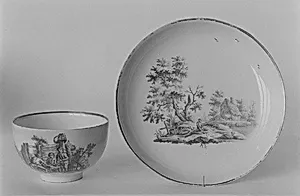
This delicate hard-paste porcelain teabowl, created around 1770 at the Zurich Pottery and Porcelain Factory, reflects the growing European fascination with tea culture and refined tableware during the Enlightenment. Standing just under two inches tall, the vessel was likely part of a larger service intended for intimate domestic use. Its smooth, translucent surface showcases the technical mastery of Swiss porcelain makers, who had only recently begun producing true hard-paste porcelain after decades of experimentation across the continent. The decoration, attributed in design to the Flemish painter David Teniers the Younger, features lively scenes of men among trees. Teniers was celebrated for his genre paintings of peasant life, and his compositions were frequently adapted onto ceramics, prints, and other decorative objects in the eighteenth century. By transferring these rustic motifs onto porcelain, the Zurich factory brought popular artistic subjects into everyday rituals, blending high-art imagery with functional objects. As a gift to the Metropolitan Museum from Henry G. Marquand in 1894, the teabowl offers visitors a glimpse into the international exchange of ideas and luxury goods that shaped European decorative arts in the late 1700s.