
Cup and saucer
1740–45
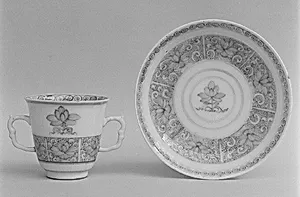
Medium
Hard-paste porcelain
Dimensions
Height (cup .144): 2 1/2 in. (6.4 cm); Diameter (saucer .145): 5 in. (12.7 cm)
Classification
Ceramics-Porcelain
Culture
German, Meissen
Department
European Sculpture and Decorative Arts
Museum
Metropolitan Museum of Art, New York, NY
Credit
The George B. McClellan Collection, Gift of Mrs. George B. McClellan, 1941
Accession Number
42.205.144, .145
Rights
Public Domain
Tags
Art Historical Context
Delight in the exquisite refinement of this cup and saucer from theissen Manufactory, between 1740 and 1745. Produced in Germany at the dawn of the Rococo era, this exemplifies the factory's mastery of hard-p porcelain—a durable, translucent material that revolutionized European ceramics. Standing just 2½ inches tall for the cup and with a 5-inch saucer diameter, these diminutive objects were designed for intimate luxury, likely gracing the tables of 18th-century aristocracy. issen, founded in 1710, was Europe's first to successfully replicate Chinese hard-paste porcelain, guarding its alchemical formula as a state secret. By the 1740s, under influential modelers like Johann Joachim Kändler, the manufactory perfected intricate overglaze enameling and gilding, often featuring delicate floral motifs as seen here. These tags of flowers evoke the Rococo taste for naturalistic abundance and playful elegance, transforming everyday tableware into high art. Housed in The Metropolitan Museum of Art's European Sculpture and Decorative Arts department, this piece from The George B. McClellan Collection highlights porcelain's cultural prestige. It symbolizes technological triumph and opulent living, inviting us to appreciate the meticulous craftsmanship that made Meissen synonymous with porcelain perfection.
About the Artist
Meissen Manufactory · 1710–present
The Meissen Manufactory, established on June 6, 1710, by Augustus the Strong, Elector of Saxony and King of Poland, marked the dawn of true hard-paste porcelain production in Europe. Nestled at Albrechtsburg Castle in Meissen near Dresden, the Royal Polish and Electoral Saxon Porcelain Manufactory arose from alchemical experiments begun in 1708 by physicist Ehrenfried Walther von Tschirnhaus and p...