
Cup and Saucer
Unknown Artist
18th century
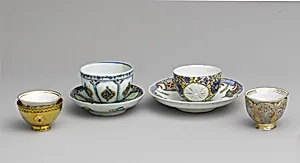
Medium
Stonepaste; polychrome painted under transparent glaze
Dimensions
Cup (a): H. 2 in. (5.1 cm) Diam. 2 3/4 in. (7 cm) Saucer (b): H. 1 in. (2.5 cm) Diam. 4 in. (10.2 cm)
Classification
Ceramics
Department
Islamic Art
Museum
Metropolitan Museum of Art, New York, NY
Credit
Rogers Fund, 1906
Accession Number
06.338a, b
Rights
Public Domain
Art Historical Context
This elegant 18th-century cup saucer, crafted from stonepaste—a fine, white-bodied ceramic prized in the Islamic world for mimicking Chinese porcelain—exemplifies the technical mastery of Middle Eastern potters. The medium features polychrome painting under a transparent glaze, vibrant colors to shimmer through protecting the intricate designs. Measuring a dainty 2 inches high for the cup and 4 inches across for the saucer, set was perfectly suited for intimate servings of tea or coffee, beverages central to Ottoman and Persian social rituals. In the Islamic ceramics tradition, stonepaste emerged around the 13th century as an innovative response to the lack of true porcelain in the region, blending local clays with frit (ground glass) for durability and translucency. By the 18th century, such pieces were produced in workshops from Istanbul to Isfahan, often adorned with floral motifs, geometric patterns, or calligraphy symbolizing paradise gardens or poetic verses. Acquired through the Rogers Fund in 1906, this anonymous work highlights everyday luxury, bridging artistry and daily life in a cosmopolitan Islamic culture. Though the artist remains unknown, the set's refined proportions and glazing technique underscore the era's emphasis on functionality fused with beauty, inviting visitors to imagine the clink of porcelain-like ware amid lively conversations in a bustling 18th-century divan.