
Cup and saucer (part of a tea set)
Unknown Artist
ca. 1805
Medium
Hard-paste porcelain
Dimensions
Height (cup [.195]): 2 5/8 in. (6.7 cm); Diameter (saucer [.196]): 4 3/4 in. (12.1 cm)
Classification
Ceramics-Porcelain
Culture
French, Paris
Department
European Sculpture and Decorative Arts
Museum
Metropolitan Museum of Art, New York, NY
Credit
Gift of Alfred Duane Pell, 1902
Accession Number
02.6.195, .196
Rights
Public Domain
Tags
Art Historical Context
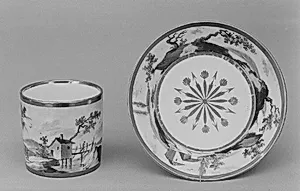
This delicate cup and saucer, of a larger tea set crafted in Paris around 1805, exemplifies the artistry of French hard-paste porcelain during the Napoleonic era. Produced in the bustling workshops of the French capital, the set features a cup standing just 2⅝ inches tall and a saucer measuring 4¾ inches across. Hard-paste porcelain prized for its durability, translucency, and ability to mimic costly Chinese imports, marked a technological triumph for European makers, allowing intricate designs to shine through thin, gleaming white bodies. The decoration—charming vignettes of houses nestled amid landscapes and trees—evokes pastoral serenity, a popular motif in early 19th-century decorative arts. These hand-painted scenes reflect the era's Romantic leanings toward nature and idealized rural life, even as Paris hummed with urban sophistication and Empire-style opulence. Tea sets like this were status symbols in elite households, facilitating the fashionable ritual of afternoon tea that bridged social gatherings across Europe. Generously gifted to the Metropolitan Museum of Art in 1902 by Alfred Duane Pell, this piece invites visitors to savor the intersection of craftsmanship, culture, and everyday elegance from revolutionary France.