
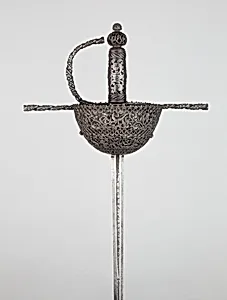
Cup-Hilted Rapier
1670/90
Medium
Steel, iron, brass, and gilding
Dimensions
Overall: H.: 114.3 cm (45 in.)
Classification
edged weapon-sword
Department
Applied Arts of Europe
Museum
Art Institute of Chicago
Accession Number
141411
Rights
Public Domain
Art Historical Context
Step into the elegant world of 17th European arms and armor with this striking *Cup-Hilted Rap*, dating to 1670–90. Measuring a full 45 inches (114.3 cm) in height, this edged weapon exemplifies the applied arts of Europe, blending deadly functionality with refined decoration. Crafted from steel for the blade, iron and brass the hilt components, and enriched with gilding, showcases the era's masterful metalworking techniques, where gold leaf or mercury gilding added a luxurious sheen fit for nobility. Originating in Spain and gaining popularity across Europe, cup-hilted rapiers like this one were favored for civilian dueling, self-defense, and as fashionable accessories during the Baroque period. The distinctive cup-shaped guard—often intricately pierced and chased—offered superior hand protection compared to earlier sword designs, reflecting advances in fencing techniques amid a culture obsessed with honor and personal combat. By the late 1600s, such weapons symbolized status, transitioning from battlefield tools to symbols of refined martial prowess. Housed in the Art Institute of Chicago's Department of Applied Arts of Europe, this anonymous masterpiece highlights the anonymous artisans' skill in balancing form and function. Its gilded accents elevate it beyond mere utility, inviting us to appreciate the artistry in everyday objects of power and prestige.
About the Artist
Unknown
The artist designated as "Unknown" in our virtual museum's collection exemplifies a poignant chapter in art history: creators whose identities have faded into obscurity despite the enduring power of their work. With only one known artwork attributed to them in our holdings, this figure represents countless anonymous hands that shaped visual culture across centuries. Museums worldwide, including th...